An AI video editor for UGC creators turns a brand brief and raw footage into finished ads. Upload your clips and product images, paste the brief, and ask for the length, hook, captions, product shots and CTA it requires. Then ask for hook variants and other aspect ratios from the same edit before you deliver.
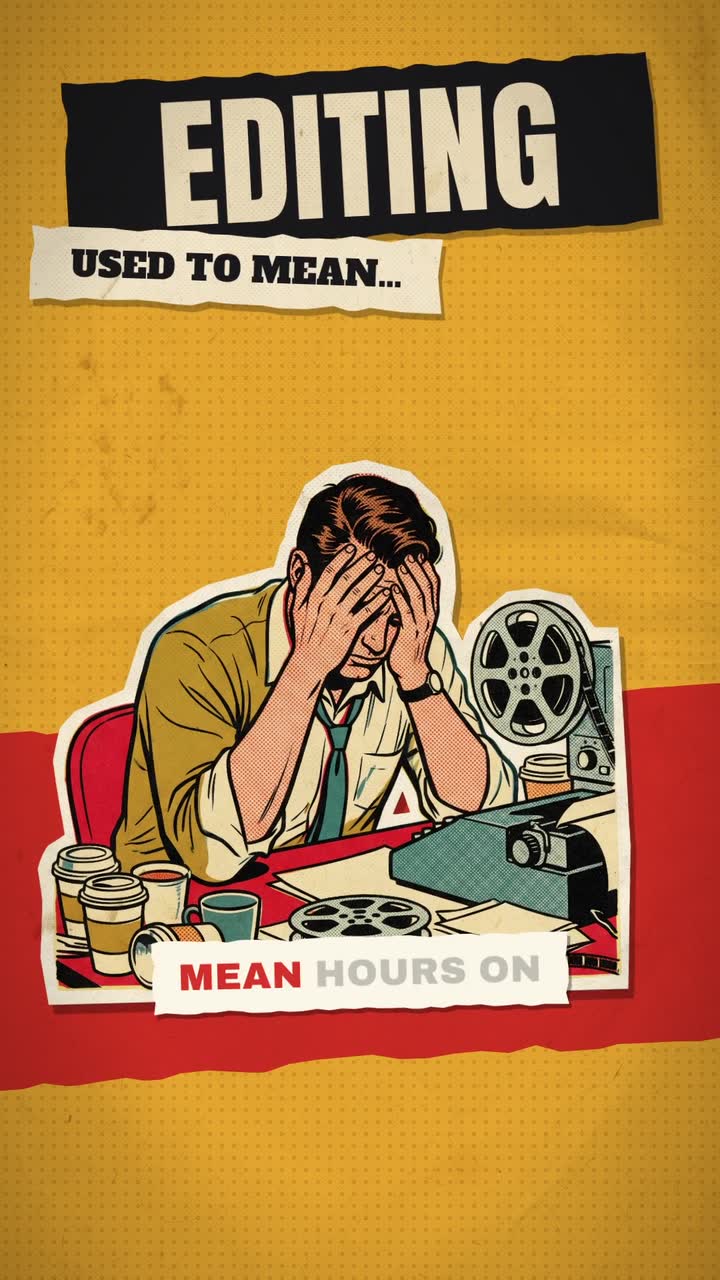
Real outputs from the Videotto template gallery.
What a UGC deliverable pack usually includes
Brands rarely want a single file. A typical UGC order is a main ad plus pieces they can test and re-cut. Check your brief, but these are the items that come up most often.
| Deliverable | Typical spec | Why brands ask for it |
|---|---|---|
| Main ad | 9:16, 1080 x 1920, usually 15 to 60 seconds | Runs on TikTok, Reels and Stories |
| Hook variants | Two or three different first 3 to 5 seconds on the same body | Testing which opening holds viewers |
| Feed cut | 4:5 (1080 x 1350) or 1:1 (1080 x 1080) | Facebook and Instagram feed placements |
| Clean version | The same edit without captions or text | So the brand can add its own copy |
| Raw footage | Unedited clips | For the brand's own editors, if your contract includes it |
Cutting all of that by hand in CapCut typically adds an hour or two on top of the main edit, mostly duplicating timelines and moving text. With an AI video editor, each extra version is a follow up request on the edit you already approved.
Brief to UGC ad: paste the brief into the prompt
Paste the brief as written. The parts that matter most are the length range, the hook, what must be on screen, the CTA text and anything you must not do.
[upload your footage]
Make a 9:16 TikTok ad from this footage, following this brief:
[paste the brief]
Length: [30 to 60] seconds. Open with an engaging hook in the first 3 seconds.
Show [the product or required scene] for most of the video.
Big engaging captions. End with the CTA: "[CTA text]".
Only use claims from the brief. Do not tag any accounts.
Ad structure, hooks and formats.
Worked example: a 30 second UGC skincare ad
An illustrative example, not a real brand or campaign. The brief asks for a 25 to 35 second TikTok ad for a moisturiser, an honest tone, no medical claims, and the CTA "Tap to shop". You film about 4 minutes of talking and product shots on your phone.
The script and beats
| Time | What you say or show | Edit |
|---|---|---|
| 0 to 3 s | "I stopped buying a new moisturiser every month." | Hook text on screen, quick punch in |
| 3 to 10 s | The problem: dry patches by midday | Close up, captions |
| 10 to 20 s | Applying the product, the texture | Product shot held, benefit callout from the brief |
| 20 to 27 s | How your skin feels at the end of the day | Back to camera, natural tone |
| 27 to 30 s | CTA | "Tap to shop" text, clear of the app buttons |
After the main edit, one follow up gets the variants: "Make two more versions with different hooks: one starting on the texture shot, one starting with 'Dry skin by lunch?' Keep everything after 3 seconds the same." A second asks for a 4:5 feed cut. That gives the brand three hooks and two formats from one shoot.
How to write UGC hook variants
A hook variant changes only the opening. The body and CTA stay identical, so the brand can tell which hook did the work. Write each hook from a different angle rather than rewording one line.
- Problem first: name the frustration the viewer has right now.
- Result first: open on the end state or the before and after.
- Pattern break: an unexpected visual, like the product in an odd place.
- Direct claim: one sentence from the brief, said to camera.
Film each spoken hook as its own short take, 3 to 5 seconds, so the editor has clean openings to swap in.
UGC ad styles and the prompts for each
Natural, talking style ads
Many briefs ask for the same thing in different words: an everyday conversation, soft selling, not an ad. Keep the edit light: clean cuts, a hook, readable captions and an occasional change of shot.
[upload your video]
Edit this into a natural TikTok ad that feels like an everyday conversation.
Remove pauses and mistakes but keep my natural tone.
Put an eye catching hook text in the first 2 seconds.
Add dynamic captions, a little above the bottom so they clear the app buttons.
Vary the framing with small punch ins so it never feels static.
Ads from a product photo
Affiliate and seller creators often start with product images and a storyboard. Ask for the product to stay exact: packaging, logo, colours and shape.
[upload your product images and storyboard]
Create a vertical 9:16 TikTok affiliate ad from this storyboard.
Use the uploaded images as the exact product reference.
Keep the packaging, logo, colours and shape exactly as they are.
Smooth camera moves across the product, animated captions with the key benefits,
and end with "[CTA text]". 20 to 30 seconds.
From one image to a full promo.
Problem and solution spots
Show the frustration, then the fix. Without a voice track, an AI voiceover in the audience's language fills the gap.
[upload your scenes]
Make a 15 second problem and solution ad.
First half: [the problem, for example a child glued to a phone].
Second half: [the solution, shown with my product].
Add an AI voiceover in [language], warm and natural, and captions that match it.
End on the product with the brand name.
Motion graphics for Meta ads
For paid ads, retention decides the cost. Overlays that call out each benefit as you say it keep people watching. Keep your face and the original background.
[upload your video]
Add infographic motion graphics to my whole video. It needs high retention for Meta ads.
Graphics are overlays. Do not replace the background.
Call out each benefit and number as I say it.
Keep the text small and clear of my face. Captions in [language].
“Make content that feels natural, like an everyday conversation. Switch up the style so it does not get boring.”
A real Otto request, Lightly edited
UGC usage rights, whitelisting and Spark Ads
Usage rights set where a brand may run your video and for how long, for example organic posts only, or paid ads for 30 or 90 days. Paid usage is normally priced on top of the video itself, so agree it in writing before you deliver.
Whitelisting, which Meta calls partnership ads, lets the brand run ads through your account, so they appear under your name. TikTok Spark Ads work on a post you have already published: you generate an authorisation code in TikTok for a set period and the brand boosts that post as an ad.
For editing, that means a Spark Ad runs exactly what you posted. Finish the edit, captions and CTA before publishing, because you cannot fix a typo in a boosted post without posting it again.
UGC ad mistakes that get sent back
- Claims the brand did not approve. Use only the claims in the brief. Say so in the prompt so on screen text never invents one.
- A changed product. If the logo or packaging looks different, the ad fails. Ask for the product to stay exact.
- The wrong length or a missing CTA. Put the length range and the exact CTA text from the brief in the prompt.
- Text under the app buttons. Keep captions and the CTA out of the bottom fifth and the right edge of the frame.
FAQ
How long should a UGC ad be?
A UGC ad is usually 15 to 60 seconds, and many brands ask for 20 to 35 seconds for TikTok and Reels. Always follow the length in the brief. If there is none, keep it as short as the story allows: a hook, the problem, the product in use and a clear CTA.
How many hook variations should a UGC creator deliver?
A UGC creator typically delivers two or three hook variations per ad unless the brief says otherwise. Each variation should change only the first 3 to 5 seconds and keep the rest identical, so the brand can test openings fairly. Some creators charge for extra hooks beyond the agreed number.
What aspect ratio should UGC videos be?
UGC videos should be filmed and delivered in vertical 9:16 at 1080 x 1920, which fits TikTok, Reels and Stories. Brands running Facebook or Instagram feed ads often also want a 4:5 or 1:1 cut. Leave space around your face and the product so a tighter crop does not cut them off.
Do UGC creators have to show their face?
UGC creators do not always have to show their face. Hands-only product demos, voiceover with product shots and unboxings are common UGC formats. Face to camera tends to feel more personal, so check what the brief asks for and say up front which formats you offer.
What is the difference between UGC and influencer marketing?
The difference between UGC and influencer marketing is who the audience is. A UGC creator makes content for the brand to post or run as ads, and is paid for the video and its usage. An influencer is paid mainly for posting to their own followers. Whitelisting blends the two.
Make your next video with Otto
Tell Otto what you want in plain words. It cuts, captions and animates the video for you.